
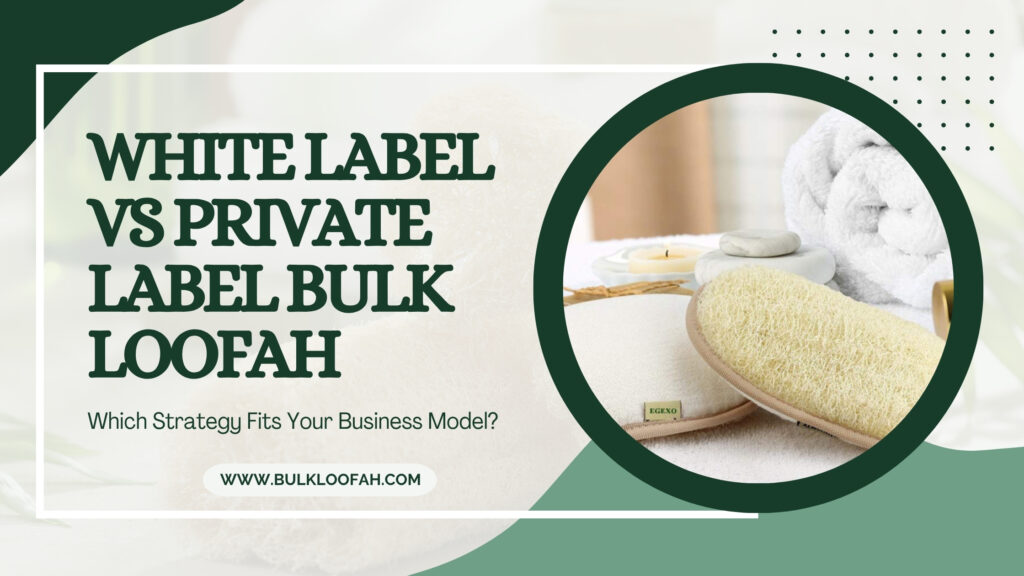
The global loofah market continues to expand, with both retail consumers and wholesale buyers recognizing the value of natural exfoliating products. Whether you manage a spa, operate an e-commerce store, run a retail chain, or supply fitness centers, understanding the difference between white label and private label bulk loofah options can determine your competitive edge and profitability. This distinction matters more than many business owners realize, especially when scaling operations across multiple locations or building a branded product line.
The choice between white label and private label bulk loofah represents a fundamental business decision that affects your brand identity, production timelines, initial investment, and long-term market positioning. For wholesale buyers seeking to stock inventory, this choice influences everything from minimum order quantities to customization possibilities. For consumers and end-users, understanding these sourcing methods helps clarify product authenticity and quality standards. Egyptian loofahs, particularly those sourced from the Nile Delta region, are soft and gentle from the first use, and EGEXO has been exporting them since 2015.
This comprehensive guide explores both strategies in detail, helping you determine which approach aligns with your business model, budget, and growth objectives. You will learn about minimum order quantities, quality specifications, pricing structures, and how to evaluate suppliers effectively. Whether you are launching your first branded line or expanding an existing product range, the insights here apply directly to your decision-making process.
Understanding White Label Loofah Products
White label loofah products are manufactured by a supplier under your brand name, but they represent a standardized item with minimal customization. You select from existing product designs, specify your branding elements like labels and packaging, and receive finished goods ready for retail or wholesale distribution. The manufacturer handles all production, quality control, and often storage, significantly reducing your operational burden.
The white label model works well for businesses prioritizing speed to market and lower initial investment. Instead of developing new product formulations or designs, you leverage the supplier’s existing infrastructure and expertise. A reputable Egyptian loofah supplier like Egexo provides consistent quality across batches, ensuring your customers receive the same product experience regardless of order timing.
White label loofahs arrive with your branding applied to packaging, labels, or tags. You control the visual presentation and brand messaging while relying on the supplier’s manufacturing excellence. This approach suits retailers, Amazon sellers, spa operators, and hospitality buyers who want branded inventory without bearing full production costs.
White Label Advantages for Business Growth
White label sourcing reduces time to market significantly. Rather than designing products from scratch, you enter the market within weeks of finalizing your branding specifications. This advantage proves crucial for retailers responding to market demands or entrepreneurs testing product concepts before committing substantial capital.
Manufacturing costs remain predictable and often lower compared to custom production. Bulk loofah suppliers maintain established production processes, economies of scale, and supplier relationships that translate to competitive pricing. You avoid developing proprietary processes or investing in specialized equipment.
Quality consistency becomes manageable because suppliers maintain standardized specifications and quality control protocols. Every EGEXO product is checked by hand for quality, size and dryness before packing, so your retail customers or institutional buyers receive reliable products that build brand trust.
White label arrangements typically involve lower minimum order quantities than private label options. This accessibility benefits growing businesses that cannot commit to massive initial orders while establishing market presence.
White Label Limitations to Consider
Your product differentiability decreases when competitors can purchase identical items from the same supplier. Multiple retailers may offer the same white label loofah, limiting your unique market positioning and potentially creating price competition.
Customization options remain restricted to branding elements. You cannot modify loofah size, density, color variations, or texture characteristics without transitioning to private label production. This limitation affects businesses wanting to address specific customer preferences or niche market demands.
Brand loyalty may remain partially with the supplier rather than your company. When customers discover the same product available elsewhere under different branding, your price premiums or marketing advantages diminish.
Scaling becomes complicated if the white label product gains significant traction. You may face supply constraints or pressure from the supplier regarding volume increases, potentially limiting your growth trajectory.
Exploring Private Label Bulk Loofah Solutions
Private label loofah manufacturing represents a fully customized approach where you collaborate with suppliers to create unique products tailored to your brand specifications. You determine loofah dimensions, density levels, color variations, packaging design, and all branding elements. The supplier manufactures products exclusively for your brand based on your exact requirements.
Private label sourcing appeals to businesses seeking genuine differentiation and long-term brand building. You invest more upfront but gain proprietary products that competitors cannot easily replicate. For retailers, hospitality groups, and Amazon sellers building premium brands, private label approaches establish defensible market positions.
The private label model requires closer collaboration with your supplier. You work through design phases, provide feedback on prototypes, conduct quality testing, and establish detailed specifications. This partnership approach ensures the final product aligns with your brand vision and customer expectations.
Private Label Advantages for Brand Development
Product uniqueness provides genuine competitive advantages. Custom specifications mean no direct competitors offer identical products, eliminating price-based competition on identical items. You can develop loofah variations sized specifically for facial use, pet grooming, kitchen applications, or specialty spa treatments that your white label competitors cannot match.
Brand differentiation becomes stronger when customers recognize your products as exclusive offerings. This perception supports premium pricing, stronger customer loyalty, and enhanced brand reputation. Private label loofahs manufactured according to your specifications embody your quality standards and brand values.
Customization flexibility addresses specific market needs. Want extra-soft loofahs for sensitive skin consumers? Need jumbo-sized options for commercial gym facilities? Require eco-friendly packaging aligned with sustainability messaging? Private label manufacturing enables all these adaptations.
Supplier relationship development strengthens over time. Working with experienced manufacturers like Egexo establishes partnerships where your supplier understands your business goals, quality expectations, and growth trajectory. This alignment benefits both parties and creates barriers to competitive imitation.
Scalability potential increases because the supplier produces your unique specifications. As demand grows, you maintain product consistency while increasing order volumes. Your suppliers become invested in your success rather than indifferent providers of commodity products.
Private Label Challenges and Considerations
Initial investment requirements exceed white label sourcing substantially. You fund product development, prototype testing, mold creation for custom shapes, and packaging design before receiving a single sellable unit.
At EGEXO private label starts from 1,000 units (up to 2,000 by customization), and there is no minimum order on standard products.
Production timelines extend significantly. Custom manufacturing involves design review, prototype creation, feedback incorporation, final mold creation, and production scheduling. Custom and private label orders take longer than standard orders; we confirm the time with your quote.
Quality control becomes your responsibility. While reputable suppliers maintain high standards, you must establish clear quality specifications, testing protocols, and acceptance criteria. Poor communication or specification misunderstanding can result in inventory that fails your brand standards.
Quality Standards and Supplier Evaluation
Whether selecting white label or private label bulk loofah options, quality evaluation remains non-negotiable. Egyptian loofah is soft and gentle from the first use, and the Nile Delta produces natural fibers that biodegrade completely.
Quality standards vary among suppliers even within Egypt. Evaluate suppliers based on cultivation practices, harvesting methods, processing techniques, and quality control protocols. EGEXO has been exporting Egyptian loofah since 2015 and checks every product by hand before packing.
Key Quality Evaluation Criteria
Natural fiber density determines loofah effectiveness and longevity. Higher density loofahs provide superior exfoliation but require more robust manufacturing. Lower density options feel gentler but may wear faster under heavy use. Request density specifications and test samples across your target range.
Color uniformity indicates consistent processing quality. Loofahs exhibiting uniform coloring throughout demonstrate standardized cleaning and drying procedures. Inconsistent coloring suggests variable processing quality or mixed harvest batches.
Structural integrity matters significantly for bulk purchases. Loofahs should maintain firmness without brittle characteristics. Squeeze test samples and verify they return to original shape. Brittle loofahs indicate over-processing or moisture loss during storage.
Odor assessment reveals processing quality and storage conditions. Fresh Egyptian loofahs emit minimal natural odor. Strong chemical smells suggest harsh processing. Musty odors indicate moisture exposure or improper storage.
Size consistency across bulk orders ensures customer satisfaction and retail packaging accuracy. Verify that width, length, and weight metrics remain consistent within acceptable tolerances across your entire shipment.
Supplier Evaluation Checklist for B2B Buyers
Use this evaluation framework when assessing white label or private label loofah suppliers:
- Verify cultivation location and years in business
- Request quality certifications and compliance documentation
- Obtain references from existing wholesale customers
- Test sample batches before committing to bulk orders
- Confirm MOQ levels align with your inventory capacity
- Clarify pricing tiers and volume discount structures
- Review payment terms and lead time guarantees
- Assess responsiveness to sample requests and inquiries
- Verify supply consistency through multi-batch orders
- Confirm logistics support and shipping options
Pricing, MOQs, and Economic Considerations
Bulk loofah pricing varies significantly based on whether you pursue white label or private label strategies. Understanding cost structures helps you calculate profitability and determine retail pricing that remains competitive while generating sustainable margins.
At EGEXO there is no minimum order on standard products. Private label starts from 1,000 units (up to 2,000 by customization). EGEXO uses four price tiers: 1-499, 500-1,999, 2,000-4,999 and 5,000+ units. See our wholesale prices on egexo.com: request a quote.
Manufacturing Process and Quality Control
Understanding how loofahs move from farm to finished product helps evaluate supplier reliability and quality consistency. Egyptian loofahs follow distinct processing stages that determine final product characteristics.
Farm to Export Loofah Process Overview
Loofah plants grow on vines in the fertile Nile Delta region where climate conditions optimize yield and fiber quality. Harvesting occurs when fruits reach maturity. Proper timing ensures maximum fiber development while maintaining optimal density.
Post-harvest processing begins immediately. Loofahs are washed to remove outer skin and debris. Drying follows: EGEXO dries loofah by sun drying and machine drying. Proper drying prevents moisture-related deterioration and mold formation.
Our standard loofah is not bleached. Bleaching is done only on request.
Final quality sorting involves visual inspection, size verification, and structural assessment. Damaged or substandard loofahs are removed before packaging. Every EGEXO product is checked by hand for quality, size and dryness before packing.
Packaging application happens last. For white label products, your branding elements get affixed. For private label items, customized packaging with your design specifications gets applied. Products then stage for shipment to your location.
Choosing Between White Label and Private Label
Your business model, growth stage, and brand ambitions determine which strategy suits you best. Early-stage retailers testing market demand often benefit from white label approaches. Established brands building long-term positioning lean toward private label investment.
White Label Works Best When
You operate as a reseller or retailer without strong brand differentiation requirements. Fitness centers, spas, and hospitality buyers often prefer white label arrangements because customers focus on product quality rather than brand identity.
You need rapid market entry without substantial capital investment. Launch your product line within weeks while maintaining low financial risk. Test customer response before committing to private label development.
Your target market prioritizes function and cost over brand prestige. Budget-conscious consumers accept white label products offering excellent quality at competitive prices. Price sensitivity often exceeds brand loyalty in value-focused market segments.
You lack design expertise or manufacturing knowledge. Suppliers handle all complexity while you manage sales and customer relationships. This division of labor suits entrepreneurs without product development experience.
Private Label Makes Sense When
You operate established retail or e-commerce channels with customer loyalty. Building exclusive products strengthens customer retention and supports premium pricing. Long-term brand value increases when customers view your products as unique.
You have identified specific market gaps or customer preferences your white label suppliers cannot address. Custom loofahs designed for sensitive skin or niche applications create differentiation competitors cannot easily replicate.
Your brand positioning emphasizes quality, sustainability, or specialty characteristics. Private label allows you to control the entire supply chain narrative and align manufacturing with your brand values. Sustainability-focused brands particularly benefit from working directly with suppliers who share environmental commitments.
You operate multi-location retail networks or substantial wholesale distribution. The economies of scale from larger volumes make private label development financially justified. Per-unit costs eventually decrease below white label pricing at significant volumes.
Building Long-Term Supplier Relationships
Success in bulk loofah procurement depends heavily on supplier relationships. Whether white label or private label, working with experienced manufacturers who understand your business goals creates mutual benefits and reduces operational friction.
EGEXO has been exporting Egyptian loofah since 2015. Experienced manufacturers understand nuanced quality variations, seasonal supply considerations, and market trends. They invest in relationships with customers pursuing consistent growth rather than one-time transactions.
Start supplier relationships by clearly articulating your business goals, growth projections, and quality expectations. Reputable suppliers appreciate transparency about your volume plans. This information helps them allocate production capacity and ensure consistent supply as you scale.
Request samples before committing to large orders. Samples are paid and the buyer pays shipping. The sample cost is credited to your first order of $1,000 or more, placed within 60 days. Quality assessment through hands-on testing with your target customers provides confidence in supplier reliability. Pay particular attention to consistency across sample batches, indicating standardized quality control.
Establish clear communication protocols and response expectations. Reliable suppliers respond to inquiries within 24 business hours and proactively address potential issues. Request regular updates on production scheduling and shipping status for large orders.
Build flexibility into your supplier contracts. Growth-focused suppliers accommodate reasonable volume increases when you experience market success. Conversely, flexible arrangements include contingencies if demand projections miss targets. Partnerships benefit both parties through reasonable adjustments rather than rigid contract terms.
Market Trends and Future Outlook
The global loofah market continues expanding as consumers increasingly prefer natural exfoliating products over synthetic alternatives. Market growth accelerates in wellness sectors, with spas, fitness centers, and hospitality facilities increasing loofah inventory for guest amenities.
Sustainability consciousness influences bulk purchasing decisions substantially. Retailers and institutions emphasize natural, biodegradable products. Egyptian loofahs align perfectly with these values, offering genuinely sustainable sourcing without synthetic additives or microplastic concerns.
E-commerce expansion creates opportunities for bulk loofah suppliers. Amazon sellers, Etsy shops, and independent retailers increasingly source inventory directly from manufacturers. White label and private label options both benefit from this distribution channel growth.
Private label customization trends show strong upward momentum. Retailers recognize that exclusive products drive customer loyalty and support margin expansion. Custom loofahs sized for specific applications, colored to match brand aesthetics, or designed for niche markets represent growth opportunities.
FAQ Section
Q1: What is the actual difference between white label and private label loofahs?
A: White label loofahs are standardized products you brand and resell with minimal customization. Private label loofahs are custom-manufactured to your specifications regarding size, density, color, and packaging. White label offers faster market entry at lower investment. Private label provides product uniqueness and stronger brand differentiation but requires longer development timelines and higher minimum orders.
Q2: How long does white label loofah sourcing typically take?
A: Lead time is 7 to 25 days from payment. Custom and private label orders take longer; we confirm the time with your quote.
Q3: What are typical minimum order quantities for white label loofahs?
A: At EGEXO there is no minimum order on standard products. Private label starts from 1,000 units (up to 2,000 by customization).
Q4: How is private label loofah development priced?
A: Cost depends on your design, packaging and volume. Send us your design and we price it in a quote.
Q5: Can I switch from white label to private label later?
A: Yes, many businesses start with white label to test market demand, then transition to private label as sales volumes justify development investment. Established suppliers support this progression, leveraging their knowledge of your business to streamline private label development. This staged approach reduces risk while enabling brand evolution.
Q6: What quality standards should I require from Egyptian loofah suppliers?
A: Require suppliers to provide quality certifications, describe how products are checked before shipping, and document their cultivation and processing procedures. Request references from existing bulk customers and test sample batches personally. Egyptian loofahs from reputable suppliers should display uniform color, consistent density, and structural integrity across entire bulk shipments.
Q7: How do I calculate retail pricing for wholesale loofahs?
A: Calculate retail pricing by considering your product cost, desired gross margin, operating expenses, and competitive positioning. Adjust based on your market positioning and customer expectations.
Q8: What shipping considerations apply to bulk loofah imports from Egypt?
A: Freight costs depend on destination and are confirmed in your quote. A full container by sea takes 18-25 days to France and 25-30 days to the USA; a shared container takes about 40 days to France and 45 to the USA; air takes 2-3 days to the destination airport.
Expert Insight from EGEXO
Since 2015 EGEXO has exported Egyptian loofah from the Nile Delta region, and we understand what differentiates good loofah from commodity products. Our experience shows that successful bulk loofah sourcing combines clear quality specifications with supplier partnerships focused on your growth. Whether selecting white label for rapid market entry or private label for brand differentiation, communicate your vision clearly. We work with retailers from single-location shops to multi-location chains, and bulk growth accelerates when suppliers understand your business trajectory. Test samples first, establish clear quality metrics, and build relationships based on transparency. Suppliers that last do so because they invest in customer success alongside their own. You can read how we work on our farm-to-export process page.
Conclusion
The white label versus private label loofah decision fundamentally impacts your business trajectory, requiring careful evaluation of your timeline, budget, growth ambitions, and brand objectives. White label sourcing provides rapid market entry at accessible price points, ideal for retailers testing demand or operators prioritizing function over brand differentiation. Private label manufacturing demands greater upfront investment and longer development timelines but delivers genuine product uniqueness, stronger customer loyalty, and sustainable competitive advantages.
Your business model, scale, and strategic positioning should guide this critical decision. Small retailers and hospitality buyers often thrive with white label approaches. Growing retailers and brands aspiring to market leadership benefit from private label customization. Many successful businesses start with white label, then transition to private label as sales volumes and market confidence increase, leveraging supplier expertise throughout both stages.
Egyptian loofah sourced from reputable suppliers like EGEXO is soft and gentle from the first use and fully biodegradable. Whichever strategy you select, prioritize supplier quality, request detailed specifications, test samples thoroughly, and build partnerships aligned with your long-term growth.
Key Takeaways:
- White label offers faster market entry at lower investment with standardized products
- Private label provides product uniqueness and stronger brand differentiation at higher cost
- Minimum order quantities vary significantly between strategies, affecting capital requirements
- Egyptian loofah is soft and gentle from the first use
- Supplier relationships matter as much as sourcing strategy for sustainable success
- Test both approaches through samples before committing substantial inventory investment
Ready to source quality bulk loofahs?
- For Wholesale Buyers: Request a bulk quote or download our complete product catalog
- For White Label Interested: Explore our products and request samples
- For Private Label Development: Learn about our custom manufacturing capabilities and request a quote
- Curious About Sourcing Process: Explore our farm-to-export process and quality standards
- For Specialized Applications: Review our diverse product categories including kitchen loofahs, raw scrubbers, and pet spa products