
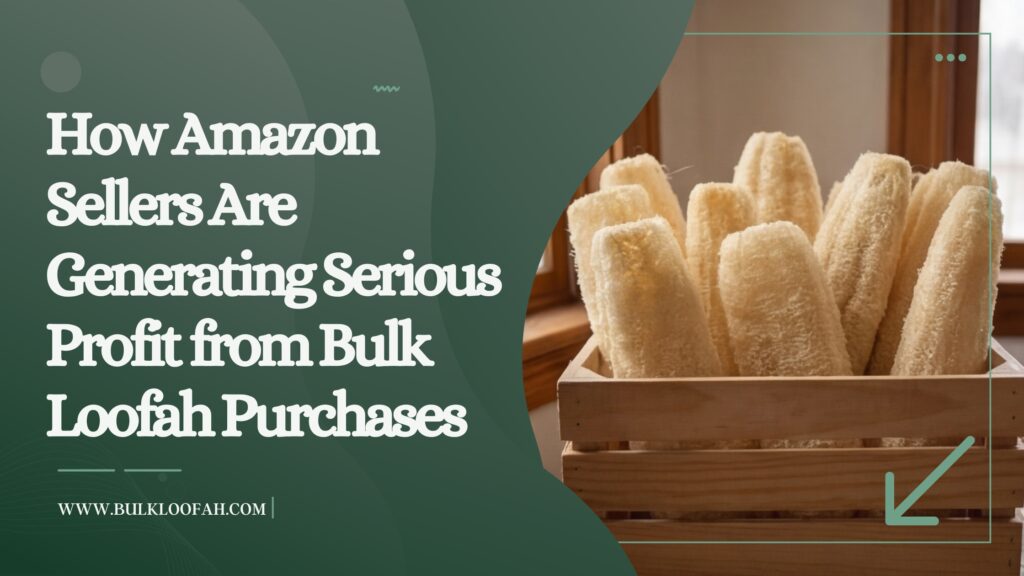
Smart sellers who figured out bulk loofah Amazon seller profit strategies early are building real businesses around a product most people overlook. Whether you are a wholesaler looking to tap into the booming online marketplace or a consumer who wants to understand why natural loofahs have become a top trending product in the bath and body category, the economics behind this opportunity are worth understanding.
Here is the reality. Natural Egyptian loofah products give Amazon sellers room to build a real brand. Sellers who source wisely, brand thoughtfully, and price strategically are building real businesses around this single product vertical. At the same time, the surge in consumer demand for eco-friendly bath products has created a market where quality matters more than ever.
In this guide, you will learn exactly how Amazon sellers structure their bulk purchasing for maximum profit, which sourcing decisions separate successful sellers from struggling ones, and how both business buyers and everyday consumers can benefit from the growing loofah economy. We will cover everything from supplier evaluation and ROI calculations to product quality standards and the practical benefits of choosing natural over synthetic. If you have been exploring wholesale loofah sourcing or simply want a better bath experience, this article has something for you.
Why Bulk Loofah Can Be a Good Amazon Product
Amazon sellers constantly search for product categories with healthy margins, low return rates, and consistent demand.
Consumer Demand Fueling the Profit Engine
For consumers reading this, here is why this matters to you. The reason Amazon sellers are investing heavily in loofah products is because buyers like you are actively choosing natural, sustainable bath accessories over plastic alternatives. This demand creates a healthy marketplace where quality products get rewarded with strong sales velocity.
If you want to explore what top quality Egyptian loofahs actually look and feel like, browsing the bath and body loofah collection from Egexo gives you a good baseline for understanding natural loofah products.
How Top Amazon Sellers Source Bulk Loofahs for Maximum ROI
The single biggest factor separating profitable Amazon loofah sellers from those who struggle is their sourcing strategy. Not all loofahs are created equal, and the supplier you choose determines your product quality, your margins, and your customer review ratings.
Why Egyptian Loofah
Egyptian loofah is soft and gentle from the first use, with a looser fiber weave than Asian loofah. The Nile Delta region provides good growing conditions: mineral-rich alluvial soil, reliable irrigation, and a warm climate.
EGEXO has been exporting Egyptian loofah since 2015. Our loofah comes from our own farms and partner farms in the Nile Delta and is processed in our own factory. You can read the steps on our farm to export process page.
Supplier Evaluation for Bulk Loofah Purchasing
Whether you are a first time buyer or an established distributor, evaluating your supplier properly protects your investment. Here is a structured approach.
Bulk Loofah Supplier Evaluation Checklist
| Evaluation Criteria | What to Look For | Why It Matters |
|---|---|---|
| Cultivation Experience | 10 plus years minimum | Ensures consistent crop quality across seasons |
| MOQ Flexibility | Willingness to work with your order size, from trial quantities to full containers | Supports both testing and scaling phases |
| Private Label Capability | Custom branding, packaging, and labeling services | Essential for Amazon brand building |
| Export Documentation | Phytosanitary certificates, customs compliance | Prevents shipment delays and border issues |
| Sample Availability | Samples available before bulk commitment | Lets you verify quality before large investment |
| Communication Response Time | Under 24 hours for inquiries | Indicates reliability for ongoing partnership |
| Certifications | ISO management system certificates and export documents | Adds marketing value and consumer trust |
If you are ready to evaluate firsthand, you can request loofah samples to test quality before committing to a bulk order.
Prices depend on your product, volume tier and packaging. See our wholesale prices on egexo.com: request a quote.
For a deeper understanding of what separates premium from average quality, the loofah quality standards page from Egexo provides detailed specifications that both sellers and consumers can reference.
Building a Loofah Brand on Amazon: From Bulk Purchase to Best Seller
Generating bulk loofah Amazon seller profit is not just about buying cheap and selling high. The sellers who build sustainable businesses approach this as brand building. Here is the process that top performers follow.
Step by Step Brand Building Process
From Bulk Order to Amazon Best Seller
| Step | Action | Timeline |
|---|---|---|
| Step 1 | Research the market and identify your niche within loofah products | Week 1 to 2 |
| Step 2 | Request samples from suppliers like Egexo to evaluate quality | Week 2 to 3 |
| Step 3 | Select your product line, such as body loofahs, kitchen scrubbers, or pet grooming pads | Week 3 to 4 |
| Step 4 | Design your brand identity and packaging with a private label manufacturer | Week 4 to 6 |
| Step 5 | Place your first bulk order | Week 6 to 8 |
| Step 6 | Create optimized Amazon listings with professional photography and keyword rich copy | Week 8 to 9 |
| Step 7 | Launch with Amazon PPC campaigns and promotional pricing | Week 9 to 10 |
| Step 8 | Collect reviews, optimize listings, and scale order volumes | Week 10 onward |
Egexo supports sellers through multiple stages of this process. Their private label loofah manufacturing service handles branding and packaging, while their custom product design team can help you create unique product configurations that stand out in a competitive marketplace.
Choosing Your Product Category
Not all loofah products perform equally on Amazon. Understanding which categories offer the best opportunity helps you focus your investment.
Each of these categories serves a different consumer need. You can explore the full range of options through collections like kitchen loofahs, raw loofah scrubbers, and pet and spa grooming products.
Natural vs Synthetic Loofahs: Why the Market Favors Natural
Both sellers and consumers need to understand the growing divide between natural and synthetic loofah products. This distinction drives purchasing decisions and directly impacts bulk loofah Amazon seller profit potential.
Head to Head Comparison
Natural Egyptian Loofah vs Synthetic Loofah
| Feature | Natural Egyptian Loofah | Synthetic Loofah |
|---|---|---|
| Material | Plant based luffa aegyptiaca fiber | Plastic mesh, nylon, or polyester |
| Exfoliation Quality | Superior, naturally textured fibers | Uneven, can be too harsh or too soft |
| Biodegradability | 100 percent compostable | Non biodegradable, contributes to landfill |
| Microplastic Shedding | None | Releases microplastics with each use |
| Consumer Trend Direction | Strongly upward | Flat to declining |
| Perceived Premium Value | High | Low to Medium |
While synthetic loofahs cost less to source, natural loofahs are fully biodegradable and match the consumer shift toward sustainable products. For sellers, this combination produces significantly better long term profitability.
For consumers making a choice, the environmental benefit alone is compelling. Every natural loofah you use means one less plastic scrubber heading to the landfill.
Scaling Your Loofah Business: From First Order to Full Operation
Once a seller validates their product market fit and sees consistent sales, the next challenge is scaling. This is where sourcing relationships, logistics planning, and brand expansion become critical.
Scaling Milestones and Strategy
Growing from a small test order to a full scale Amazon operation requires hitting certain milestones. Here is what the progression typically looks like.
During the testing phase, most sellers order between 500 and 1,500 units to validate demand and collect initial reviews. This stage usually lasts one to three months and focuses on a single product type. The goal is to confirm your listing converts and your product earns positive feedback.
The growth phase involves scaling to 3,000 to 5,000 units per order and expanding into two or three product types. Sellers at this stage invest more heavily in Amazon advertising and begin building brand recognition. Order frequency increases to monthly or bimonthly shipments.
At the established phase, sellers are ordering 10,000 plus units, maintaining three to five product variations, and often expanding beyond Amazon into their own Shopify stores or retail partnerships. This is where having a reliable supplier with strong export capabilities becomes non negotiable.
To support your scaling strategy, downloading the full Egexo product catalog gives you a comprehensive view of available products, sizes, and configurations. For custom volume pricing, you can request a bulk quotation tailored to your specific needs.
Logistics and Import Considerations
Successful Amazon loofah sellers pay close attention to logistics. Natural loofah products need to be shipped in dry, ventilated packaging to prevent moisture damage. Choosing a supplier like Egexo, who understands export requirements and provides proper phytosanitary documentation, prevents costly delays at customs.
Most sellers ship via sea freight for bulk orders. A full container by sea takes 25-30 days from Egypt to the USA. Air takes 2-3 days to the destination airport and costs more per unit. Smart sellers maintain a 60 to 90 day inventory buffer to avoid stockouts, which can devastate Amazon rankings.
What Consumers Should Know About Buying Loofahs on Amazon
If you are shopping for loofahs on Amazon rather than selling them, understanding how the marketplace works helps you make better purchasing decisions.
How to Identify Quality Loofah Listings
Not every loofah on Amazon is created equal. Many low cost listings use inferior product sourced from regions that do not match the fiber quality of Egyptian loofah. Here are practical tips for spotting quality.
Look for listings that specify the country of origin. Sellers who proudly state their loofahs are Egyptian sourced are typically working with better raw material. Check the product photography closely. Premium natural loofahs have a consistent, tight fiber structure with a uniform tan to light brown color.
Read through the reviews, paying special attention to comments about durability, texture, and smell. Quality Egyptian loofahs should have a mild, natural plant scent and should not fall apart after a few uses. Listings with photos from verified purchasers showing the actual product in use are especially helpful.
Caring for Your Natural Loofah
Whether you bought your loofah on Amazon or directly from a supplier, proper care extends its life and keeps it hygienic. Rinse your loofah thoroughly after each use and squeeze out excess water. Hang it in a well ventilated area outside the shower to dry completely between uses. Replace your bath loofah when it starts to break down or smell.
Expert Insight from EGEXO
Since 2015 we have exported Egyptian loofah to buyers in the USA, Europe, Canada, Australia, the Gulf and every other country we can ship to, and the team at EGEXO has watched the Amazon marketplace transform the loofah industry. The single most important factor in building a profitable Amazon loofah business is product quality consistency. When your loofah meets or exceeds customer expectations every single time, your reviews build naturally, your return rate stays low, and your advertising efficiency improves because satisfied customers drive word of mouth. We always recommend that new sellers order samples first and physically inspect the product before committing to a bulk order. This step alone prevents the most common sourcing mistakes we see in the industry. Egyptian loofah is soft and gentle from the first use, and an exporter that works from its own farms and factory is a solid foundation for sustainable profit. We also help Amazon sellers with FBA preparation such as labels and packing, and we can ship directly to Amazon warehouses on your behalf. Learn more about why choose EGEXO.
Frequently Asked Questions
Q1: How much profit can Amazon sellers realistically make from bulk loofah purchases?
A: Bulk loofah Amazon seller profit depends on your sourcing cost, shipping, packaging, Amazon fees, and advertising. Work out your numbers for each product before you scale, and request a quote to see EGEXO wholesale prices.
Q2: What is the minimum order quantity for bulk loofah purchases from a quality supplier?
A: At EGEXO there is no minimum order on standard products. Private label starts from 1,000 units (up to 2,000 by customization). Requesting a custom quotation is the best way to get pricing for your specific quantity needs.
Q3: Why choose Egyptian loofah for Amazon selling?
A: Egyptian loofah is grown in the nutrient rich Nile Delta region. It has a looser fiber weave than Asian loofah, so it is soft and gentle from the first use.
Q4: Is a natural loofah better than a synthetic one?
A: Natural loofahs are fully biodegradable and do not shed microplastics, which makes them a more eco-friendly choice than synthetic scrubbers. Rinse a natural loofah thoroughly after each use and let it dry between uses.
Q5: Can I create my own private label loofah brand for Amazon?
A: Yes, private labeling is one of the most popular strategies for Amazon loofah sellers. Suppliers like Egexo offer complete private label manufacturing including custom branding, packaging design, and product configuration. This allows you to build a unique brand identity rather than selling generic products in a competitive marketplace.
Q6: What types of loofah products sell best on Amazon?
A: Body and bath loofahs remain the highest volume category, but kitchen loofah scrubbers and pet grooming loofahs are growing rapidly with less competition. Gift sets and bundles perform well during holiday seasons. Diversifying across multiple categories helps stabilize revenue year round.
Q7: How do I ensure the loofah I buy on Amazon is genuinely natural and not synthetic?
A: Check the product listing for country of origin, specifically Egypt. Look at customer review photos for visual confirmation. Natural loofahs have an irregular, fibrous texture and a tan to light brown color. Avoid products with perfectly uniform shapes or bright colors, as these are typically synthetic or heavily processed.
Q8: What shipping and logistics should Amazon sellers plan for when importing bulk loofah?
A: Sea freight for a full container takes 25-30 days from Egypt to the USA. Sellers should maintain a 60 to 90 day inventory buffer to prevent stockouts. Natural loofah requires dry, ventilated packaging during transport. Working with a supplier like Egexo who provides full export documentation including phytosanitary certificates ensures smooth customs clearance.
Conclusion
The bulk loofah Amazon seller profit opportunity is real, measurable, and growing. As consumer demand for natural, sustainable bath and body products continues to climb, sellers who invest in quality sourcing and brand building are positioned to capture significant market share. At the same time, consumers benefit from an expanding marketplace filled with better products and more transparent sellers.
The key principles are straightforward. Source a quality product, such as Egyptian loofah from an experienced supplier like EGEXO. Build a brand rather than selling a commodity. Understand your unit economics before scaling. And whether you are buying one loofah for your shower or ten thousand for your Amazon store, quality should never be the thing you compromise on.
Key Takeaways:
- Egyptian loofah is soft and gentle from the first use
- Private labeling through an experienced supplier is the most effective path to building a sustainable Amazon loofah business
- Consumers benefit from the growing natural loofah market through better product availability and increasing quality standards
- Starting with samples, validating demand with a small order, and scaling methodically reduces risk and maximizes long term profitability
Ready to experience Egyptian loofah quality?
- For Wholesale Buyers: Request a bulk quote or download the complete product catalog
- For Individual Orders: See all products or request samples to see the quality firsthand