
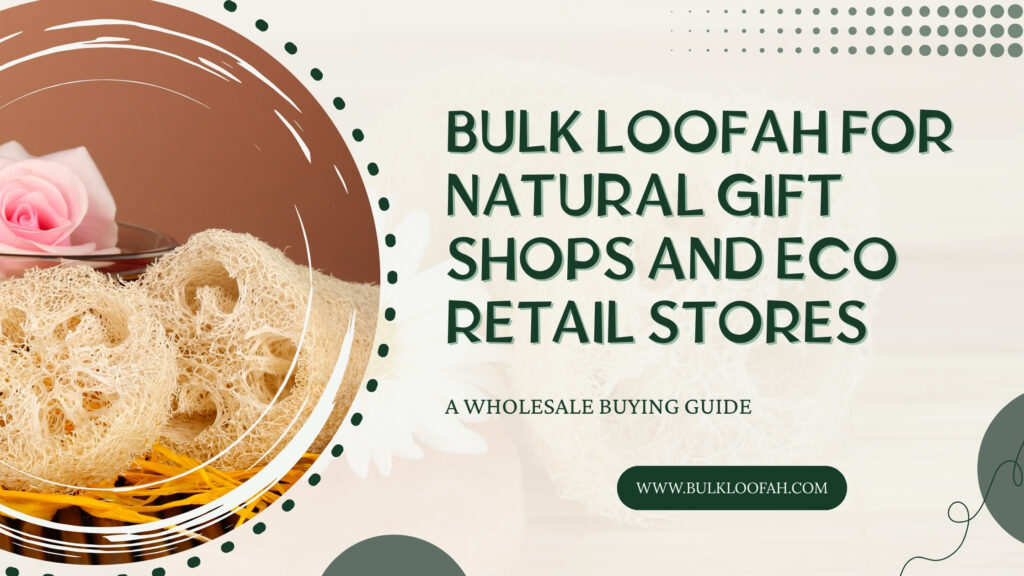
The natural products market has experienced unprecedented growth. At the heart of this revolution sits the humble loofah, a completely biodegradable bath and cleaning essential that bridges the gap between sustainability and functionality. Whether you’re a natural gift shop owner evaluating wholesale suppliers or a conscious consumer seeking to understand what makes quality loofah products worth purchasing, understanding the bulk loofah marketplace is essential for making informed decisions.
Bulk loofah for natural gift shops and eco retail stores represents more than just inventory management. It’s about curating products that align with environmental values while maintaining healthy profit margins. For individual shoppers, knowing how retailers source these products helps identify authentic quality. This comprehensive guide explores wholesale procurement strategies, quality assessment criteria, pricing structures, and sustainable sourcing practices that benefit both business buyers and end users who want to support ethical retail.
From minimum order quantities to quality checks, from Egyptian cultivation standards to private labeling opportunities, this guide covers everything needed to navigate the bulk loofah marketplace with confidence. Store owners will discover how to evaluate suppliers and maximize returns, while consumers gain insight into what separates premium loofah products from inferior alternatives.
Understanding the Bulk Loofah Market for Retail Success
The loofah industry has transformed dramatically over the past decade as consumer awareness about plastic pollution has skyrocketed. Natural gift shops and eco retail stores now serve as essential distribution channels for sustainable bath and home products. For retailers entering this market, understanding supply chain dynamics ensures competitive positioning. For consumers, this knowledge explains why prices vary and what justifies premium products.
Market Dynamics Driving Loofah Demand
Several converging trends have created robust demand for bulk loofah in retail environments. The global movement away from synthetic bath sponges has accelerated as microplastic concerns dominate environmental discussions. Gift shops specializing in natural products stock loofah items as a staple.
Eco-conscious consumers actively seek zero-waste alternatives, creating reliable demand that supports bulk purchasing strategies. This consumer behavior shift benefits both retailers who can stock confidently and shoppers who enjoy wider product selection. The sustainability narrative surrounding natural loofahs resonates across demographics, from millennials furnishing first apartments to established households transitioning toward greener lifestyles.
Why Egyptian Loofah
Not all loofahs deliver equal performance, and sourcing origin significantly impacts product quality. Egyptian loofah is soft and gentle from the first use, with a looser fiber weave than Asian loofah. The Nile Delta offers mineral-rich soil, consistent sunlight, and traditional cultivation methods.
EGEXO has been exporting Egyptian loofah since 2015. Our loofah comes from our own farms and partner farms in the Nile Delta and is processed in our own factory.
Wholesale Buying Criteria: What Retailers and Informed Consumers Should Know
Successful bulk loofah procurement requires systematic evaluation across multiple quality dimensions. Retail buyers must assess these factors to protect margins and reputation, while educated consumers can use the same criteria to evaluate products on store shelves.
Every EGEXO product is checked by hand for quality, size and dryness before packing.
Physical Specifications That Matter
Beyond grading, specific physical characteristics determine product suitability for different retail applications and consumer needs. Retailers ordering bulk loofah for gift shops and eco stores should specify these parameters clearly.
Ask for your product’s size and packaging in writing, and request samples to check them before ordering.
Certification and Compliance Requirements
Natural product retailers and conscious consumers increasingly prioritize verified sustainability claims. Legitimate bulk loofah suppliers provide documentation supporting quality and ethical sourcing assertions.
Retailers should understand their supplier’s growing practices: loofah does not require heavy pesticide or fertilizer. Egexo’s transparent farm-to-export process demonstrates the traceability that builds consumer confidence.
Phytosanitary certificates prove products meet international plant health standards, essential for cross-border wholesale transactions. Retailers importing bulk loofah should verify suppliers handle export documentation properly. Quality control documentation detailing inspection processes and standards provides additional assurance for both retail buyers and their customers.
Strategic Sourcing: Finding and Evaluating Bulk Loofah Suppliers
Supplier selection represents the most critical decision in bulk loofah procurement. The right partnership ensures consistent quality, reliable delivery, and sustainable business growth. Poor supplier choices lead to inventory problems, customer complaints, and margin erosion.
Supplier Evaluation Checklist
Retailers should systematically assess potential loofah suppliers using comprehensive criteria. This structured approach minimizes risk and identifies partners capable of supporting long-term growth.
Wholesale Loofah Supplier Assessment Framework
| Evaluation Category | Key Questions | Red Flags | Green Flags |
|---|---|---|---|
| Production Capacity | Can they scale with your growth? | Vague quantity limits | Clear MOQ and maximum capacity stated |
| Quality Control | What inspection processes exist? | No documented standards | A described quality check process |
| Supply Consistency | Track record for on-time delivery? | Frequent stockouts mentioned | Established inventory buffers |
| Communication | Response time and language capabilities? | Slow or unclear responses | Prompt, detailed communication |
| Flexibility | Custom processing or packaging options? | Rigid standard offerings only | Private labeling and custom design available |
| Transparency | Willing to share cultivation practices? | Secretive about sourcing | Open farm documentation |
| Sample Policy | How do they handle test orders? | Expensive or reluctant sampling | Professional sample programs |
Gift shop and eco store owners should never skip the sampling phase. Ordering representative samples from multiple suppliers enables direct quality comparison before committing to bulk purchases. This small upfront investment prevents costly mistakes.
Understanding Minimum Order Quantities
MOQ requirements significantly impact purchasing decisions for both new and established retailers. Bulk loofah suppliers typically structure minimums based on container capacity, processing efficiency, and market positioning.
At EGEXO there is no minimum order on standard products, so smaller natural gift shops can access wholesale pricing without overwhelming inventory commitments. EGEXO uses four price tiers: 1-499, 500-1,999, 2,000-4,999 and 5,000+ units. Private label starts from 1,000 units (up to 2,000 by customization).
New retailers should resist overcommitting initially. Starting with smaller quantities allows market testing and prevents capital tie-up in slow-moving inventory. As sales patterns emerge, increasing order volumes captures better pricing while maintaining healthy inventory turnover.
Pricing Structures and Profit Margin Optimization
Understanding wholesale pricing dynamics helps retailers make informed purchasing decisions while maintaining competitive retail prices. Consumers benefit from this transparency by recognizing fair value.
Factors Influencing Bulk Loofah Pricing
Multiple variables affect wholesale costs beyond simple supply and demand. Savvy retailers account for these factors when comparing supplier quotes and setting retail prices.
Order volume significantly impacts per-unit costs through economies of scale. Suppliers spread fixed costs across larger quantities, passing savings to volume buyers. Processing requirements add costs when retailers request specific sizing, packaging, or treatments beyond standard offerings. However, these customizations often justify premium retail pricing that protects margins.
Seasonal timing influences pricing in agricultural markets. Loofah harvests typically occur in fall months, with fresh inventory availability potentially offering better pricing than off-season purchases drawing from stored stock. Shipping methods and destination affect landed costs substantially, particularly for international orders requiring ocean freight, customs clearance, and inland transportation.
Calculating Retail Margins
Successful natural gift shops and eco stores balance competitive pricing with sustainable margins. Understanding markup structures ensures business viability while delivering customer value.
Retailers should calculate total landed costs including shipping, customs, handling, and any processing before applying markup formulas. Hidden costs erode margins when not properly accounted for in pricing strategies. Creating pricing tiers allows serving different customer segments, with premium hand-picked loofahs at higher margins subsidizing promotional entry-level products that drive traffic.
Consumers shopping natural gift shops should recognize that fair pricing reflects real costs beyond product acquisition. Quality retailers invest in knowledgeable staff, sustainable operations, and carefully curated inventory. These value-adds justify price differences versus mass-market discount channels.
Product Selection Strategies for Different Retail Environments
Bulk loofah for gift shops and eco stores should reflect each establishment’s unique market position and customer base. Strategic product selection maximizes sales while minimizing inventory complexity.
Natural Gift Shop Loofah Assortments
Gift-focused retailers benefit from emphasis on presentation and versatility. These customers often purchase for others, valuing aesthetic appeal and perceived luxury.
Exfoliating bath and body loofahs form the foundation, offering familiar functionality in premium packaging. Gift shops should stock variety packs combining different textures and sizes, creating ready-made gift solutions. Specialty items like loofah soap holders or facial rounds add unique options that differentiate from mass market offerings.
Seasonal gift sets perform exceptionally well, bundling loofahs with complementary natural products like natural soaps or essential oils. These curated combinations command premium pricing while simplifying customer decision-making. The pre-assembled nature aligns perfectly with gift-giving occasions throughout the year.
Private label loofah manufacturing enables gift shops to develop signature product lines that build brand loyalty and prevent direct price comparison with competitors. This differentiation strategy supports premium positioning and repeat business.
Eco Retail Store Product Mix
Stores emphasizing environmental sustainability should prioritize products that tell compelling zero-waste stories while serving practical daily needs.
Kitchen loofahs deserve prominent placement, offering customers immediate replacement for synthetic dish sponges. These practical items generate frequent repeat purchases as customers incorporate them into daily routines. Educational signage highlighting microplastic reduction and biodegradability reinforces purchase motivation.
Raw loofah scrubbers appeal to DIY-oriented customers who enjoy customization. Selling unprocessed or minimally processed loofahs at accessible price points encourages experimentation and multiple purchase occasions. Providing cutting suggestions and usage ideas adds value without inventory complexity.
Bulk bins or self-serve displays work well for eco stores, reducing packaging waste while allowing customers to select precisely what they need. This approach aligns with zero-waste principles and creates engaging shopping experiences.
Specialty Applications Worth Considering
Forward-thinking retailers explore beyond traditional bath applications to capture additional market segments and usage occasions.
Loofah pet and spa grooming products serve growing pet care markets where natural options increasingly replace synthetic alternatives. Pet owners appreciate gentle, chemical-free grooming tools, creating cross-selling opportunities for retailers with diverse customer bases.
Gardening and outdoor applications represent emerging categories. Natural loofahs serve as eco-friendly pot scrubbers, biodegradable seed starting containers, and gentle plant cleaning tools. Retailers near gardening communities or in areas with strong outdoor cultures can capitalize on these alternative uses.
Craft and DIY markets offer opportunities for raw loofah sales to makers incorporating natural materials into handmade products. Providing bulk options for artisans creates B2B opportunities within retail environments.
Quality Control and Inventory Management Best Practices
Maintaining product quality throughout the supply chain protects both retailer reputation and consumer satisfaction. Systematic approaches prevent common pitfalls that plague natural product inventory.
Receiving and Inspection Procedures
Implementing consistent receiving protocols ensures wholesale loofah shipments meet specifications before entering regular inventory. This quality gate prevents customer-facing problems.
Quality Control Inspection Checklist
| Inspection Point | Acceptance Criteria | Rejection Triggers | Documentation Required |
|---|---|---|---|
| Packaging Integrity | Clean, undamaged containers | Water damage, crushing, contamination | Photo record of condition |
| Quantity Verification | Count matches order within 2% | Significant shortages | Signed receiving documents |
| Visual Quality | Consistent with the product ordered | Excessive seeds, discoloration, breakage | Sample retention from batch |
| Size Consistency | Within specified dimensions | More than 15% outside range | Measurement records |
| Moisture Content | Dry to touch, no mold smell | Dampness, musty odors | Moisture meter readings if available |
| Documentation | All certificates and invoices present | Missing required paperwork | Complete file for shipment |
Retailers should conduct inspections immediately upon delivery while drivers remain available to note damage on delivery receipts if necessary. Opening random cartons from different pallet positions reveals whether quality problems exist throughout shipments or only in specific areas.
Maintaining sample retention from each shipment provides reference points for resolving any future disputes and tracks supplier consistency over time. This practice becomes particularly valuable when scaling orders or changing specifications.
Storage Conditions That Preserve Quality
Proper storage prevents quality degradation between wholesale receipt and retail sale. Natural loofahs require specific conditions to maintain optimal condition.
Climate control represents the most critical storage factor. Loofahs should remain in low-humidity environments, ideally below 60% relative humidity, to prevent mold growth. Temperature stability matters less than moisture control, though moderate temperatures between 15-25 Celsius prove ideal. Excessive heat can cause brittleness while cold itself poses few problems.
Air circulation prevents moisture accumulation even in properly climate-controlled spaces. Avoid storing loofahs directly against walls or in sealed containers for extended periods. Breathable packaging or open shelving maintains the airflow that keeps products fresh.
Light exposure causes gradual color fading and fiber degradation. While some discoloration doesn’t affect functionality, it reduces aesthetic appeal for retail display. Store bulk inventory in dark or low-light areas, reserving well-lit spaces for customer-facing displays with regular turnover.
Pest prevention deserves attention despite loofahs’ natural resistance to most storage pests. Maintaining clean, organized storage areas and using natural pest deterrents protects inventory without chemical contamination. Regular inventory rotation using first-in, first-out principles ensures older stock sells before quality degradation occurs.
Sustainable Sourcing and Environmental Considerations
Environmental authenticity drives purchasing decisions for both natural gift shops and their customers. Genuine sustainability practices create compelling stories that support premium pricing and customer loyalty.
Cultivation and Processing Environmental Impact
Understanding loofah production’s environmental footprint helps retailers make informed sourcing decisions and educate customers about product benefits.
Traditional loofah cultivation operates as inherently sustainable agriculture when practiced properly. The plants grow as annual vines requiring minimal synthetic inputs compared to conventional crops. Well-managed loofah farms improve soil structure through plant matter contribution and support beneficial insect populations that reduce pest pressure naturally.
Water requirements for loofah cultivation remain moderate, particularly when compared to water-intensive crops like cotton. Egyptian loofah production benefits from Nile Valley irrigation systems developed over millennia, utilizing water efficiently through traditional knowledge. However, retailers should verify that suppliers follow responsible water management practices appropriate to their regional contexts.
Processing stages present opportunities for environmental care or carelessness. Mechanical fiber extraction using simple equipment minimizes energy consumption compared to chemical processing. Sun drying reduces energy use where the climate allows. EGEXO works from its own farms and factory, a transparency advantage worth consideration.
Packaging decisions significantly influence total environmental impact. Retailers should question whether bulk loofah arrives in recyclable or biodegradable packaging materials. Requesting minimal packaging or plastic-free shipping materials aligns procurement practices with sustainability values. These considerations appeal to conscious consumers evaluating which retailers authentically support environmental protection.
Transportation and Carbon Footprint Considerations
Moving products from Egyptian farms to retail shelves generates environmental impacts that vary dramatically based on logistics decisions.
Ocean freight represents the most carbon-efficient option for international bulk loofah shipments, generating far less CO2 per ton-mile than air freight. Retailers should specify ocean shipping unless time constraints absolutely require faster delivery. Consolidating orders to fill containers efficiently maximizes the environmental benefits of ocean transport.
Regional distribution after port arrival creates additional carbon considerations. Retailers should calculate total journey distances when evaluating suppliers. Working with importers who maintain US or European distribution centers may reduce environmental impact compared to direct-from-origin shipping for smaller orders, despite adding a distribution layer.
For consumers, purchasing from local retailers who consolidate bulk loofah shipments proves more environmentally responsible than ordering individual items internationally. This supports the value proposition for natural gift shops and eco stores serving community needs efficiently.
Carbon offset programs offered by some suppliers allow retailers to neutralize transportation emissions through verified environmental projects. While not substitutes for reducing emissions at source, these programs demonstrate commitment to environmental responsibility that resonates with conscious consumers.
Business Development and Growth Strategies
Establishing bulk loofah inventory represents just the beginning for ambitious retailers. Strategic growth planning transforms initial product lines into significant revenue contributors.
Private Labeling and Brand Development
Creating proprietary loofah product lines builds lasting business value impossible with generic resale alone. Private labeling transforms retailers from commodity merchants into brand owners.
Private label loofah manufacturing allows natural gift shops and eco stores to develop signature products reflecting unique brand identities. Custom packaging featuring store branding creates instant differentiation from mass-market competitors. This exclusivity prevents direct price comparison and supports premium positioning.
Retailers can start small with private labeling, perhaps beginning with single signature products before expanding to full lines. Initial investments in custom packaging design and minimum order quantities pay dividends through enhanced perceived value and customer loyalty.
Custom loofah product design enables retailers to create unique items unavailable elsewhere. Developing specialty shapes, size combinations, or processing treatments establishes market positions competitors cannot easily copy. These innovations become talking points that drive word-of-mouth marketing.
Consumers increasingly seek authentic local brands with transparent sourcing. Retailers who develop private label loofah lines with clear Egyptian origin stories satisfy this demand while building business equity. The combination of local retail presence with international quality sourcing creates compelling positioning.
Expanding Sales Channels
Successful retailers rarely depend on single revenue streams. Diversifying sales channels spreads risk while accelerating growth.
E-commerce integration allows natural gift shops and eco stores to serve beyond geographic limitations. Online sales of loofah products work particularly well since customers understand the category and value sustainable shipping. Retailers can fulfill online orders from existing bulk inventory, maximizing purchasing efficiency.
Wholesale partnerships with complementary businesses create B2B revenue without additional retail overhead. Spas, yoga studios, boutique hotels, and wellness centers regularly seek natural product suppliers. Retailers with established bulk loofah procurement can white-label products or provide wholesale supply to these commercial buyers.
Subscription programs build predictable recurring revenue while ensuring customers never run out of fresh loofahs. Monthly or quarterly loofah subscriptions with rotating varieties create convenience that justifies premium pricing. This model works exceptionally well for eco stores emphasizing sustainable lifestyle habits.
Event sales at farmers markets, craft fairs, and eco-festivals expose products to new customer segments while moving inventory. These temporary retail opportunities require minimal setup but generate sales and brand awareness efficiently. Bulk purchasing enables price flexibility for event promotions without sacrificing margins.
Educational Marketing That Drives Sales
Information-rich marketing approaches separate successful natural product retailers from struggling competitors. Educated customers become loyal advocates.
In-store educational displays explaining loofah cultivation, processing, and environmental benefits transform browsing into buying. Simple signage answering common questions removes purchase hesitation. Staff training on loofah quality standards enables confident customer conversations that build trust.
Content marketing through blogs, social media, and email newsletters positions retailers as authorities rather than mere merchants. Sharing usage tips, sustainability information, and care instructions provides value that strengthens customer relationships.
Workshop and demonstration events create experiential engagement that accelerates purchase decisions. Hosting loofah care workshops, DIY loofah soap-making classes, or sustainability seminars attracts environmentally conscious community members. These events generate immediate sales while building long-term customer relationships.
Partnerships with local influencers and wellness practitioners extend marketing reach efficiently. Providing complimentary products to yoga instructors, estheticians, and environmental bloggers generates authentic endorsements worth more than paid advertising. These relationships develop organically when retailers demonstrate genuine commitment to quality and sustainability.
Supplier Relationships and Long-Term Partnership Development
Transactional supplier relationships limit growth potential. Strategic partnerships with quality bulk loofah suppliers create competitive advantages and operational stability.
Communication and Expectation Management
Clear communication prevents the misunderstandings that plague international wholesale relationships. Establishing protocols from initial contact creates foundations for successful long-term partnerships.
Retailers should document all specifications, quality expectations, and delivery requirements in writing before placing orders. Assumptions about “standard” products vary across cultures and businesses. Explicit written specifications with visual examples prevent disappointment and costly disputes.
Regular communication maintains relationship health beyond transaction moments. Quarterly check-ins discussing market trends, upcoming promotions, and potential order changes help suppliers plan production efficiently.
Being realistic about lead times and production cycles demonstrates respect for supplier operations. Rush orders should remain exceptions rather than standard practice. Retailers who provide reasonable planning windows receive better quality attention and pricing consideration. Understanding that agriculture operates on natural cycles rather than just-in-time manufacturing prevents unrealistic demands.
Prompt payment according to agreed terms builds trust and reliability reputation. Suppliers prioritize customers who honor financial commitments consistently. This reliability often translates to flexibility during temporary difficulties or special requests.
Leveraging Supplier Expertise
Experienced loofah suppliers possess knowledge accumulated over years of exporting. Retailers who tap this expertise accelerate learning curves and avoid common mistakes.
Asking suppliers like Egexo about emerging trends provides early awareness of market shifts. Suppliers working across many retailers observe pattern changes before individual stores notice them. This intelligence helps retailers adjust inventory strategies proactively rather than reactively.
Requesting application suggestions reveals usage occasions retailers may not have considered. Suppliers familiar with how diverse customers utilize products can suggest merchandising approaches and product combinations that improve sales velocity.
Quality problem-solving benefits from supplier input when issues arise. Rather than immediately blaming suppliers for perceived defects, collaborative investigation often reveals handling, storage, or expectation mismatches. Suppliers invested in long-term relationships help retailers optimize operations for product category success.
New product development collaboration allows retailers to influence supplier offerings. Sharing specific customer requests or market gaps gives suppliers direction for innovation. This partnership approach often results in exclusive or early access to new products that provide competitive timing advantages.
Evaluating Partnership Value Beyond Price
Lowest-cost suppliers rarely deliver best total value. Sophisticated retailers evaluate partnerships holistically across multiple dimensions.
Supplier Partnership Value Assessment
| Value Dimension | Evaluation Criteria | Why It Matters |
|---|---|---|
| Quality Consistency | Variation across shipments | Reduces customer complaints and returns |
| Communication Responsiveness | Reply speed and clarity | Enables quick problem resolution |
| Flexibility | Willingness to accommodate changes | Supports business agility |
| Innovation Support | New product development assistance | Maintains competitive differentiation |
| Market Intelligence | Trend insights and forecasting | Improves inventory planning |
| Financial Terms | Payment flexibility and dating | Impacts cash flow management |
| Delivery Reliability | On-time shipment percentage | Prevents stockout losses |
Building depth with fewer high-quality suppliers often proves more valuable than spreading purchases across many marginal sources. Concentrated volume typically unlocks better terms, priority service, and collaborative innovation. This strategic approach requires confidence in supplier selection but pays dividends through operational simplicity and relationship strength.
Practical Implementation Roadmap for New Retailers
Entering bulk loofah procurement can feel overwhelming for natural gift shops and eco stores without wholesale experience. This systematic approach reduces risk while building sustainable operations.
Phase 1: Market Research and Planning
Before contacting suppliers or placing orders, invest time understanding your specific market context and customer base.
Analyze existing customer demographics and purchasing patterns. Review sales data from complementary natural products to estimate potential loofah demand. Customer surveys or informal conversations reveal interest levels and price sensitivity. This foundation prevents overcommitting to inventory before validating market fit.
Competitive research identifies what other local retailers stock and how they position loofah products. Note pricing, product variety, and merchandising approaches. Identify gaps representing opportunities rather than attempting to replicate successful competitors exactly.
Financial planning establishes realistic budgets for initial inventory investment, storage requirements, and working capital needs. Calculate how long inventory might sit before selling and ensure cash flow supports this timeline. Starting conservatively with smaller orders reduces financial stress while proving concept viability.
Phase 2: Supplier Selection and Sampling
Armed with market understanding and financial parameters, begin systematic supplier evaluation.
Research multiple potential suppliers including established sources like Egexo alongside alternatives. Request information about product lines, quality standards, minimum orders, and terms. Download product catalogs to compare offerings systematically.
Order samples from top candidates representing different product types. Personal evaluation reveals quality differences better than descriptions alone. Test samples thoroughly, ideally getting customer feedback before committing to bulk orders.
Compare samples across suppliers using consistent criteria. Document observations about fiber quality, size consistency, appearance, and performance. This structured approach prevents relying solely on subjective impressions.
Phase 3: Initial Ordering and Inventory Setup
First orders establish operational precedents affecting long-term success. Approach this phase deliberately.
Start with conservative quantities even if pricing incentivizes larger orders. Proving sales velocity before scaling prevents capital trapped in slow-moving inventory. Mixed assortments covering different product types reveal customer preferences without overcommitting to specific items.
Agree terms that balance supplier requirements with your cash flow. EGEXO terms for large orders are 50% advance payment and 50% before shipment, or an irrevocable confirmed L/C at sight against shipping documents. Clarify all specifications in written purchase orders referencing samples previously approved.
Prepare receiving and storage systems before inventory arrives. Having inspection checklists, storage areas, and inventory tracking ready prevents scrambling when shipments deliver. This preparation demonstrates professionalism that supports supplier confidence in your operation.
Phase 4: Sales and Performance Monitoring
Converting inventory into revenue requires active merchandising and systematic performance tracking.
Create compelling displays highlighting sustainability stories and usage versatility. Educational signage reduces staff burden while informing customers effectively. Position loofah products near complementary items encouraging basket building.
Track sales velocity by SKU to identify winners and underperformers quickly. This data guides reorder decisions and inventory optimization. Share performance feedback with suppliers, providing market intelligence that strengthens partnerships.
Gather customer feedback systematically through conversations, reviews, or simple surveys. Understanding what customers love or wish was different guides product selection refinement. This voice-of-customer input proves invaluable for long-term success.
Phase 5: Scaling and Optimization
Success with initial inventory creates opportunities for strategic expansion.
Increase order volumes on proven products to capture better pricing and improve margins. Document sales history supporting larger commitments, building confidence in demand forecasting.
Experiment with new product varieties based on customer requests and market trends. Maintaining some inventory turnover through limited-time offerings creates excitement and repeat visit motivation.
Consider private labeling once core products achieve consistent sales. This brand development represents natural progression from successful resale, building business value beyond commodity transactions.
Develop reordering rhythms matching sales velocity to minimize stockouts while maintaining fresh inventory. Automated tracking systems or simple spreadsheets prevent oversights that disappoint customers.
FAQ Section
Q: What minimum order quantities should natural gift shops expect when buying bulk loofah for the first time?
A: At EGEXO there is no minimum order on standard products, so smaller natural gift shops and eco stores can access wholesale pricing without overwhelming inventory commitments. Private label starts from 1,000 units (up to 2,000 by customization). New retailers should resist pressure to order larger quantities until sales patterns validate demand.
Q: How can individual consumers identify whether retail shops source quality Egyptian loofah versus inferior alternatives?
A: Consumers can evaluate loofah quality through several observable characteristics and retailer transparency indicators. Quality Egyptian loofahs feel soft and gentle, with natural beige to light brown coloring and minimal seed content. Reputable retailers provide origin information, often highlighting Egyptian sources. Ask store staff about supplier relationships and whether products come from farm-to-export operations like EGEXO’s. Retailers confident in their sourcing willingly discuss cultivation and processing practices.
Q: How should eco retail stores price bulk loofah products?
A: Margins depend on your pricing and costs. Calculate total landed costs including shipping, customs, and processing before applying your own markup, so margins cover all expenses while staying competitive in your market.
Q: How do bulk loofah purchasing decisions impact environmental sustainability for both retailers and consumers?
A: Bulk loofah procurement significantly reduces environmental impact compared to individual small-quantity orders through consolidated shipping efficiency, minimal packaging, and economies of scale. Retailers purchasing containers of loofahs from quality Egyptian suppliers minimize carbon footprint per unit through ocean freight efficiency and reduced packaging waste. Consumers shopping at retailers with established bulk loofah programs support sustainable distribution models rather than generating individual international shipments. Natural loofahs themselves offer environmental advantages over synthetic alternatives, biodegrading completely, unlike plastic sponges. Sourcing from suppliers practicing sustainable cultivation like traditional Egyptian farms using minimal synthetic inputs and natural pest management extends environmental benefits throughout the supply chain. The combination of product sustainability and efficient distribution makes bulk loofah for gift shops and eco stores among the most environmentally responsible bath product categories.
Q: What storage conditions do retailers need to maintain bulk loofah inventory quality between wholesale purchase and retail sale?
A: Proper loofah storage requires low-humidity environments ideally below 60% relative humidity to prevent mold growth, with moderate temperatures between 15-25 Celsius and adequate air circulation. Retailers should store bulk inventory away from direct wall contact using breathable shelving that maintains airflow around products. Avoid sealed containers for extended storage, as trapped moisture causes quality degradation even in climate-controlled spaces. Minimize light exposure for bulk stock to prevent color fading and fiber degradation, reserving well-lit displays for customer-facing inventory with regular turnover. Implement first-in, first-out rotation ensuring older inventory sells before quality changes occur. These relatively simple storage requirements make loofahs easier to maintain than many natural products requiring refrigeration or more intensive climate control. Following these practices preserves the quality that customers expect while protecting retailer investment in wholesale inventory.
Q: Should new eco retail stores invest in private label loofah products or start with generic bulk loofah resale?
A: New retailers should generally establish sales history with generic bulk loofah resale before investing in private labeling, though specific circumstances may justify earlier brand development. Starting with quality branded or unbranded wholesale products minimizes initial investment while proving customer demand and identifying best-selling items. This foundation provides data supporting intelligent private label decisions rather than guessing which products deserve custom development. After 6-12 months of consistent sales demonstrating viable demand, transitioning top performers to private label creates differentiation without excessive risk. However, retailers with existing strong brand identity and customer loyalty might justify earlier private labeling to reinforce brand positioning from initial loofah introduction. Consider private label loofah manufacturing when ready to commit: at EGEXO it starts from 1,000 units (up to 2,000 by customization). The margin improvement and competitive protection private labeling provides rewards retailers once base demand proves sustainable through initial generic product sales.
Q: How can retailers educate customers about loofah quality differences to justify premium pricing for Egyptian sources?
A: Effective customer education combines visual demonstrations, comparative information, and transparent sourcing stories that help shoppers understand value beyond price. Create in-store displays contrasting Egyptian loofah characteristics like fiber density and uniformity against typical alternatives, allowing customers to touch and compare directly. Develop simple educational materials explaining how cultivation conditions along the Nile Delta suit the crop and give a soft, gentle loofah. Share supplier relationships transparently, highlighting partnerships with established sources like EGEXO, which has exported Egyptian loofah since 2015. Staff training on quality standards enables confident conversations addressing customer questions about pricing differences. Let customers feel the softness of the loofah themselves. This education transforms price objections into value recognition, building customer appreciation for the quality sourcing that benefits both retailers and conscientious consumers.
Q: What shipping and logistics considerations affect bulk loofah procurement costs for natural gift shops?
A: International bulk loofah shipping involves multiple cost factors including ocean freight charges, customs duties, port handling, and inland transportation that collectively impact total landed costs. Ocean freight remains most economical for container quantities, with full container loads offering better per-unit shipping costs than less-than-container consolidation. Customs duties vary by destination country; buyers may pay lower or zero import duty with origin papers, so please confirm with your customs broker. Port handling and drayage charges for moving containers from ships to final destinations add costs that fluctuate based on port congestion and fuel prices. Retailers should calculate total landed costs including all logistics elements before applying markup formulas to ensure pricing covers actual expenses. Working with suppliers experienced in export logistics like Egexo often simplifies this complexity through established freight partnerships and documentation expertise. For smaller retailers unable to fill containers independently, partnering with importers maintaining domestic distribution centers may reduce complexity despite adding distribution layer costs, particularly for initial orders while building toward container-direct volumes.
Expert Insight from EGEXO
Since 2015 we have exported Egyptian loofah to buyers in more than 40 countries, and we consistently observe that the most successful gift shops and eco stores approach bulk purchasing strategically rather than transactionally. The retailers who thrive long-term invest time understanding quality standards and cultivation practices before placing their first orders. They recognize that loofah represents more than commodity inventory, it embodies sustainability values their customers actively seek.
Our most valued retail partners maintain realistic expectations about agricultural products, understanding that natural variations exist even within consistent quality. They communicate clearly about their specific needs and market positioning, allowing us to match appropriate products to their customer base. These retailers view supplier relationships as partnerships rather than vendor transactions, creating collaborative dynamics that benefit both businesses and ultimately the conscious consumers they serve.
The Egyptian loofah story goes beyond softness to encompass traditional cultivation knowledge passed across generations. When retailers share our farm-to-export story with their customers, they transform simple bath products into meaningful sustainability choices. This narrative depth justifies premium positioning while building the authentic environmental credentials that modern consumers demand from natural product retailers. You can read the steps on our farm-to-export process page.
Conclusion
Navigating bulk loofah for natural gift shops and eco retail stores requires balancing quality assessment, supplier relationships, financial considerations, and market positioning. Whether approaching as a wholesale buyer building sustainable retail inventory or a conscious consumer seeking to understand what makes loofah products worth purchasing, the core principles remain consistent: prioritize quality sourcing, demand transparency, and recognize that genuine sustainability commands fair pricing.
Egyptian loofah is soft and gentle from the first use, which many retailers and their customers value. Suppliers like EGEXO who work from their own farms and factory provide the consistency and transparency that successful long-term retail relationships require. These partnerships transform commodity transactions into collaborative ventures supporting sustainable business growth.
The natural products market continues expanding as environmental awareness drives purchasing decisions across demographics. Retailers who establish quality bulk loofah programs position themselves advantageously within this growth trajectory, serving conscious consumers while building sustainable margins. For individual shoppers, supporting retailers who source thoughtfully reinforces market demand for ethical practices throughout supply chains.
Key Takeaways:
- Egyptian loofah is soft and gentle from the first use, which retailers and consumers value
- Systematic supplier evaluation focusing on quality standards, transparency, and communication capabilities prevents costly purchasing mistakes
- Strategic inventory management balancing initial conservative orders with data-driven scaling optimizes cash flow while capturing growth opportunities
- Private labeling and brand development create long-term value beyond commodity resale, supporting premium positioning and customer loyalty
- Environmental sustainability requires attention throughout procurement from cultivation practices through logistics and packaging decisions
Ready to experience Egyptian loofah quality?
For Wholesale Buyers: Request a quote for bulk loofah tailored to your natural gift shop or eco retail store needs, or download our complete product catalog to explore our full range of sustainable bath and cleaning products.
For Individual Orders: See our products, or request samples to experience the quality difference before committing to larger purchases.